How sin broke the communion and God restored it through the temple and Christ.
The story of Eve, Adam, and the Fall is not merely an ancient explanation of how evil entered the world. It is the gateway to the entire Bible: it reveals who we were, what we became, why we hid from God, and how He restored, through Christ, the fellowship that sin destroyed.
From Eden to the tabernacle, from the temple to Jesus Christ and finally to the New Jerusalem, the Scriptures tell one great story: God returns to dwell with his people.
Before the Fall: Man in the Presence of God
In Genesis 1–2, God created man and woman in his image:
“So God created man in his own image, in the image of God he created him; male and female he created them.” — Genesis 1:27
Adam and Eve lived in direct communion with their Creator. They knew neither guilt nor shame. They had a purpose, a good job, and the freedom to enjoy the garden.
God set only one limit: they were not to eat from the tree of the knowledge of good and evil (Genesis 2:16–17). That command was not oppression, but protection. To obey meant trusting in God’s wisdom and goodness.
Adam was not just the first man. He represented humanity; therefore, his decisions would affect all his descendants.
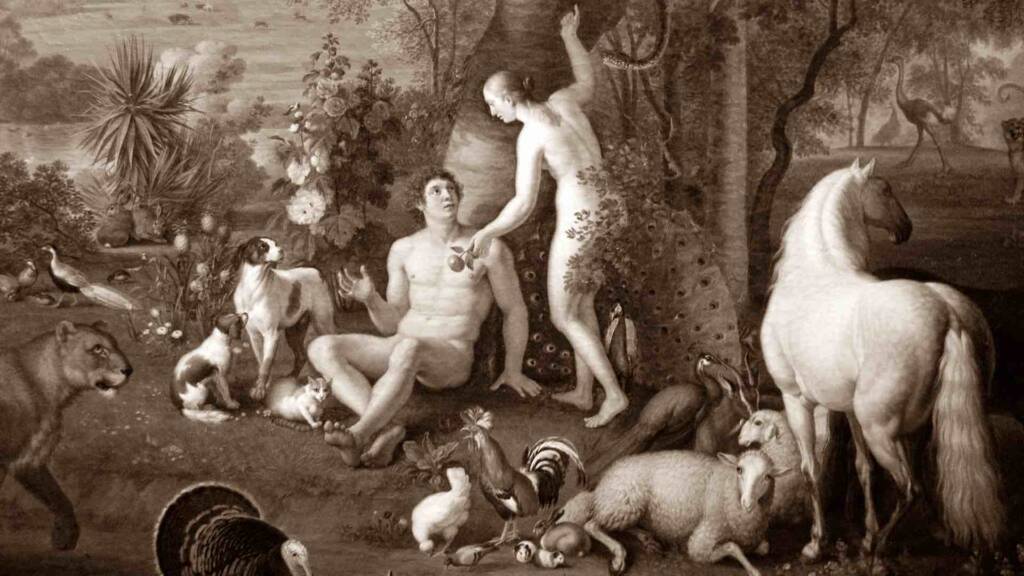
Eve, Adam and the nature of the Fall
The temptation began with a question: “Did God really say…?” (Genesis 3:1). The serpent sowed doubt about God’s Word and intentions.
Eve saw the fruit, desired it, took it, and ate it. Then she gave it to Adam, who also ate it. Eve was deceived, but Adam acted consciously (1 Timothy 2:14). As the representative of humanity, his disobedience introduced sin and death.
“Sin entered the world through one man, and death through sin.” — Romans 5:12
The sin in Eden was much more than eating a piece of fruit. It was unbelief, pride, ingratitude, and rebellion: the desire to live independently of God.
Their eyes were opened, but not as they had expected. They felt shame, covered their bodies, and hid. Adam blamed Eve, and Eve blamed the serpent. In an instant, sin fractured humanity’s relationship with God, with one another, and with creation.
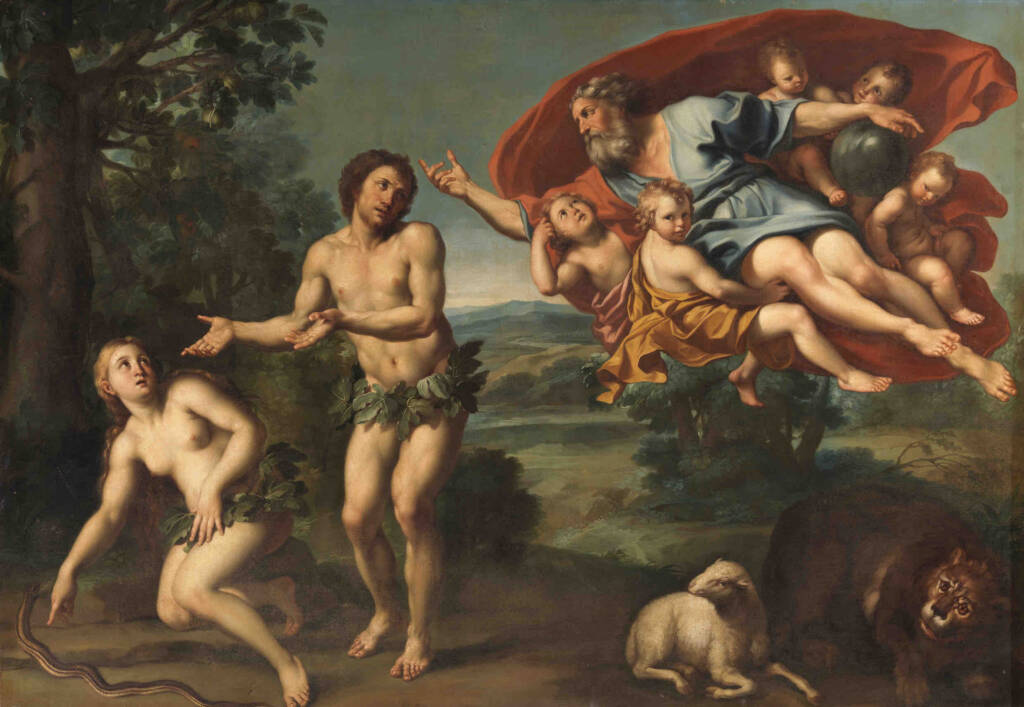
From Communion to Exile
After the Fall, humanity continued to bear the image of God, but that image was damaged. Humanity passed from innocence to guilt, from life to death, and from communion to exile.
Spiritual death was immediate: the relationship with God was broken. Physical death began to dominate human existence: “You are dust, and to dust you shall return” (Genesis 3:19).
Pain, conflict, weariness, frustration, guilt, and shame also appeared. Adam and Eve were expelled from Eden, and cherubim guarded the path to the tree of life.
However, God did not abandon them. He clothed them with tunics of skin, anticipating that sin would require sacrifice, and announced the first promise of redemption:
“He will strike your head, and you will strike his heel.” — Genesis 3:15
A descendant of the woman would come. The serpent would wound him, but He would ultimately crush its head.
God Begins to Restore the Relationship
Before sin, Adam and Eve walked with God; afterward, they hid from Him. Before, they were naked and felt no shame; afterward, they tried to cover themselves. Before, they had access to the tree of life; afterward, they were separated by cherubim.
Sin erected a barrier between God and humankind. Even so, God called to Adam, “Where are you?” (Genesis 3:9). God knew where he was. The question was directed at a lost man, inviting him to come out of hiding.
From then on, God developed his plan of redemption through covenants with Noah, Abraham, Moses, and David, until reaching the new covenant in Jesus Christ.
The Old Testament presents three fundamental elements:
- One people: Israel, the descendants of Abraham.
- One place: the tabernacle and, later, the temple.
- A promise: a new covenant in which sins would be forgiven and God’s law would be written on the heart.
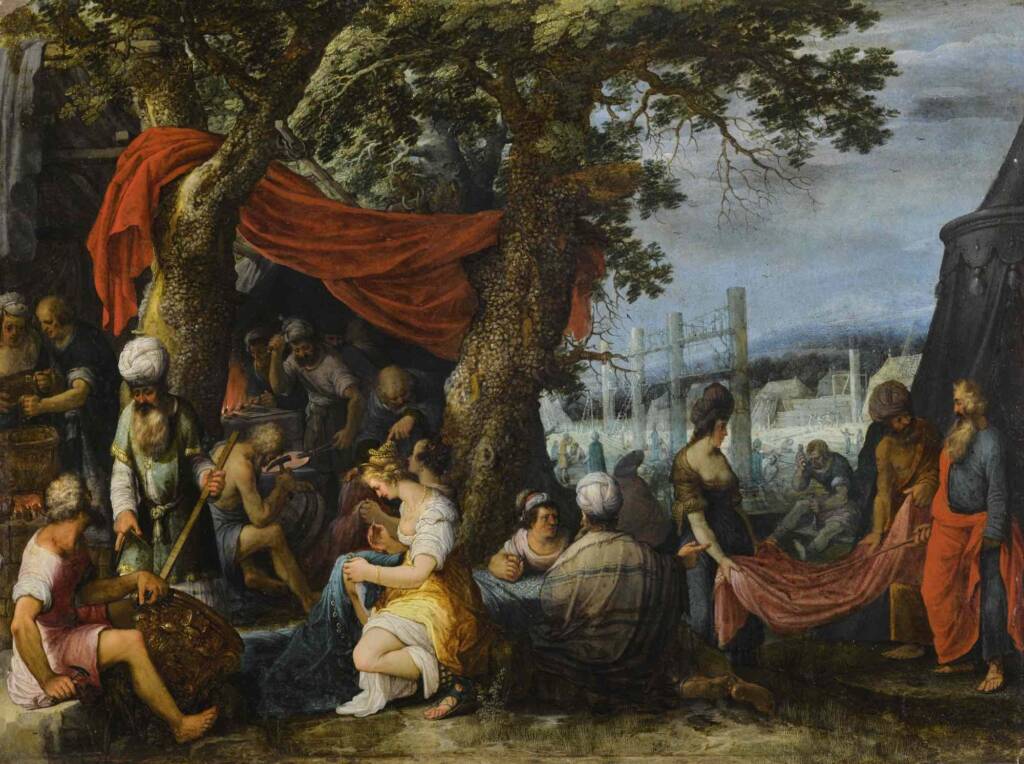
The Tabernacle and the Temple: A Partial Restoration
After the exodus, God commanded the construction of the tabernacle, a portable sanctuary where he would dwell among his people. Later, Solomon built the temple in Jerusalem, which was filled with divine glory (1 Kings 8:10–11).
The temple evoked Eden. God dwelt among his people, the priests served as mediators, and the sacrifices covered sin. Even cherubim appeared embroidered on the veil.
But the restoration was still incomplete. The veil blocked access to the Holy of Holies. Only the high priest could enter, and only once a year, and the sacrifices had to be repeated constantly.
The temple was a shadow that heralded a higher reality.
Christ: God Returns to Dwell Among Us
Jesus is the true temple:
“And the Word became flesh and dwelt among us.” — John 1:14
The word translated as “dwelt” literally means that he established his tabernacle among us. In Jesus Christ, the presence of God came to dwell with humanity.
Jesus is also the true Lamb who takes away the sin of the world and the great High Priest who offered his own life once and for all. At the Last Supper he declared:
“This cup is the new covenant in my blood, which is poured out for you.” — Luke 22:20
When Christ died, the veil of the temple was torn from top to bottom (Matthew 27:51). The barrier was opened, not because humanity had reached God, but because Christ bore the guilt and curse of sin.
Through Him:
- Our sins are forgiven.
- We are adopted as children of God.
- The Holy Spirit dwells within us.
- We became the temple of God.
- We can approach the Father with confidence.
The relationship broken in Eden was not restored by another building, but by a Person: Jesus Christ .
The Final Hope: The Restored Eden
The Bible ends where it began, but with a fully renewed creation. Revelation presents a new heaven, a new earth, and the New Jerusalem:
“Behold, the dwelling place of God is with men, and He will dwell with them, and they shall be His people.” — Revelation 21:3
There will be no death, no crying, no shame, no separation. The tree of life will be available again, the serpent will have been defeated, and the curse will be gone.
Adam, Eve, and the Fall explain our deepest problem. The temple and Christ reveal God’s redemptive purpose: to return and dwell forever with his people.
Questions for reflection
- In what aspects of my life do I continue to hide from God?
- Do I trust that His Word is good, even when I don’t understand it?
- With what “fig leaves” do I try to cover my sin?
- How does my prayer change when I know that Christ is my temple and High Priest?
- How should someone who has returned to the presence of God live?
Cover art: Expulsion of Adam and Eve, 1791, by Benjamin West.