The Bronze Serpent: Looking to the Cross in the Wilderness
Some biblical accounts are strange, uncomfortable, and profoundly meaningful. The bronze serpent in the wilderness is one of them.
Israel rebelled, venomous serpents attacked, and God commanded the people to look at a bronze serpent raised on a pole. Why would He use the image of their destruction as the means of deliverance?
The answer leads directly to the Gospel. We must consider three things together: the people’s sin, the lifted serpent, and Christ’s finished work on the cross.
1. The People’s Sin: The Poison of Ingratitude
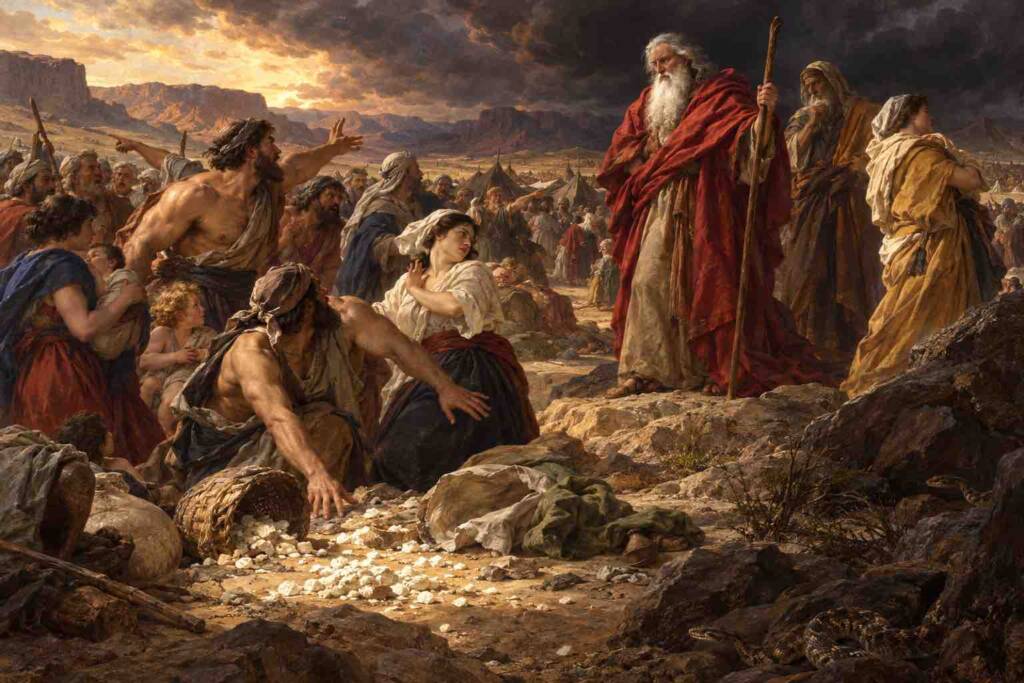
Near the end of Israel’s forty years in the wilderness, the people had witnessed miracle after miracle. God had provided manna, water from a rock, clothing that did not wear out, and strength for the journey. Yet they became impatient.
“And the people spoke against God and against Moses, ‘Why have you brought us up out of Egypt to die in the wilderness? For there is no food and no water, and we loathe this worthless food.’” — Numbers 21:5
They were not merely complaining about hardship; they were rejecting God’s provision. They called the miraculous bread from heaven “worthless.” They forgot Egypt’s slavery and despised the faithfulness of the God who had delivered them.
This is the essence of sin: doubting God’s goodness, rejecting His provision, and preferring our own way.
Judgment and Repentance
God’s response was severe:
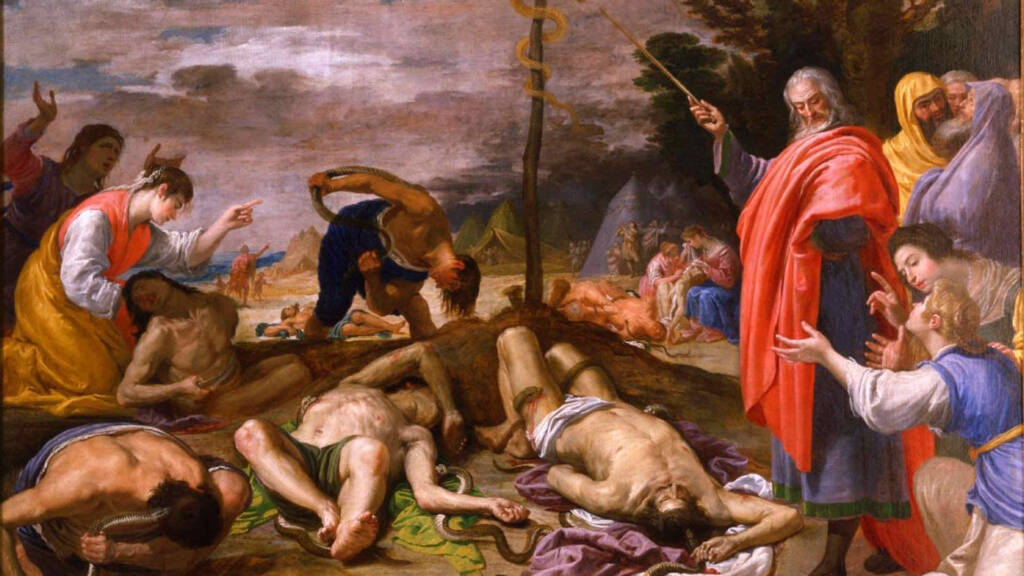
“Then the LORD sent fiery serpents among the people, and they bit the people, so that many people of Israel died.” — Numbers 21:6
These were likely venomous snakes whose bites caused intense burning and death. The people had no antidote.
This is a picture of sin. Sin is more than a bad habit; it is a deadly poison that we cannot remove from ourselves.
The people finally confessed: “We have sinned, for we have spoken against the LORD and against you” (Numbers 21:7). They asked Moses to intercede for them. Salvation begins when we recognize our condition and cry out for mercy.
2. The Lifted Serpent: A Strange Remedy
When Moses prayed, God did not remove the snakes. Instead, He gave an astonishing command:
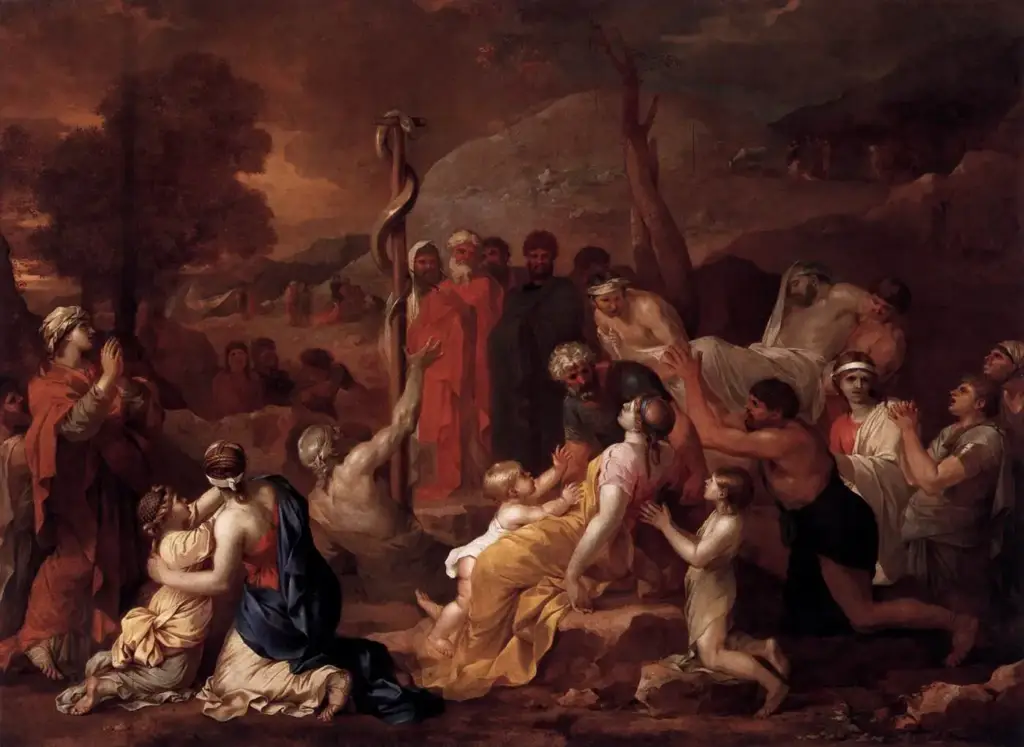
“Make a fiery serpent and set it on a pole, and everyone who is bitten, when he sees it, shall live.” — Numbers 21:8
Moses made a bronze serpent and raised it before the people. Anyone who had been bitten could look at it and live.
God did not give them medicine, instruct them to fight the snakes, or tell them to flee. He commanded them to face an image of the very thing that was killing them.
The serpent represented the curse, judgment, and death. Looking at it meant acknowledging that the danger was real, the judgment deserved, and God’s remedy their only hope.
The bronze serpent had no power in itself. Healing came through trusting the provision God had made.
Face the Threat—Under God’s Authority
The lifted serpent also declared God’s sovereignty: Face the threat, for I control it; I am the Creator of all things.
The people had to look directly at the symbol of their destruction. God did not ask them to pretend the danger did not exist. He required them to confront it under His authority.
The serpents were not beyond God’s control. He used them as instruments of judgment and used their bronze image as an instrument of mercy. The serpent, the venom, the judgment, and the remedy all remained under His sovereign hand.
The surrounding nations often worshipped serpents, but Israel’s God declared that the serpent possessed no independent power. He created it and ruled over it. He could use a serpent to judge and its image to heal.
The Simplicity of Faith
The remedy was simple: Look and live.
There were no works to perform, no penance to complete, and no journey to make. The wounded person simply had to trust God enough to look.
Those who rejected God’s remedy and relied upon their own would die. The condition was faith—expressed by looking toward what God had provided.
3. The Foreshadowing of Christ
Centuries later, Nicodemus came to Jesus by night. During their conversation, Jesus returned to this wilderness event:
“And as Moses lifted up the serpent in the wilderness, so must the Son of Man be lifted up, that whoever believes in him may have eternal life.” — John 3:14–15
Jesus explicitly connected the bronze serpent to His crucifixion.
The serpent represented sin’s curse. On the cross, Christ took that curse upon Himself:
“Christ redeemed us from the curse of the law by becoming a curse for us.” — Galatians 3:13
As the bronze serpent was raised on a pole, Jesus was raised on the cross. Though He knew no sin, He was made to be sin for us (2 Corinthians 5:21). He bore the judgment our rebellion deserved.
At the cross, God confronted the ultimate enemies: sin, death, and the curse. Christ did not defeat them from a distance. He entered into death and conquered it from within. The Creator entered His creation to redeem it, using the instrument of death to bring eternal life.
When we look to the crucified Savior in faith, our sins are forgiven and the poison of sin loses its claim upon us.
The message remains: Look and live.
4. Do Not Worship the Symbol
The story has a tragic epilogue. The bronze serpent was intended as a temporary remedy pointing toward a greater reality. Centuries later, however, Israel began worshipping it.
King Hezekiah “broke in pieces the bronze serpent that Moses had made,” because the people were burning incense to it (2 Kings 18:4). They called it Nehushtan—“a piece of bronze.”
They had transformed a means of grace into an idol.
We face the same temptation. Ministries, traditions, disciplines, buildings, and religious objects can become substitutes for God. We can worship the method instead of the Master and the symbol instead of the Savior.
The bronze serpent possessed no power of its own. Neither does a cross necklace, church building, or religious ritual. Our hope rests in the Person of Jesus Christ.
5. Where Are You Looking?
The bronze serpent confronts us with a personal question: Where are you looking for healing?
We have all been poisoned by sin. We cannot save ourselves, undo our past, or heal our souls through self-help, religious performance, distraction, or moral effort.
There is only one remedy:
“Look to me, and be saved, all the ends of the earth! For I am God, and there is no other.” — Isaiah 45:22
Jesus was lifted up for you. He became the curse so that you could be free. He bore your sin so that you could be healed. He died so that you could live.
Look away from your own efforts and toward His finished work. Look away from the temporary things of this world and toward the One who was lifted up.
Look and live.
Reflection Questions
- Have I complained about God’s provision as Israel did in the wilderness?
- Do I recognize the seriousness of sin, or do I treat it lightly?
- Am I relying upon my own remedies, or am I looking to Christ?
- What does it mean for me to look to Jesus each day?
- Have I turned any good tradition, discipline, or ministry into an idol?
- Who in my life needs to hear about the remedy of the cross?